

Quick answer
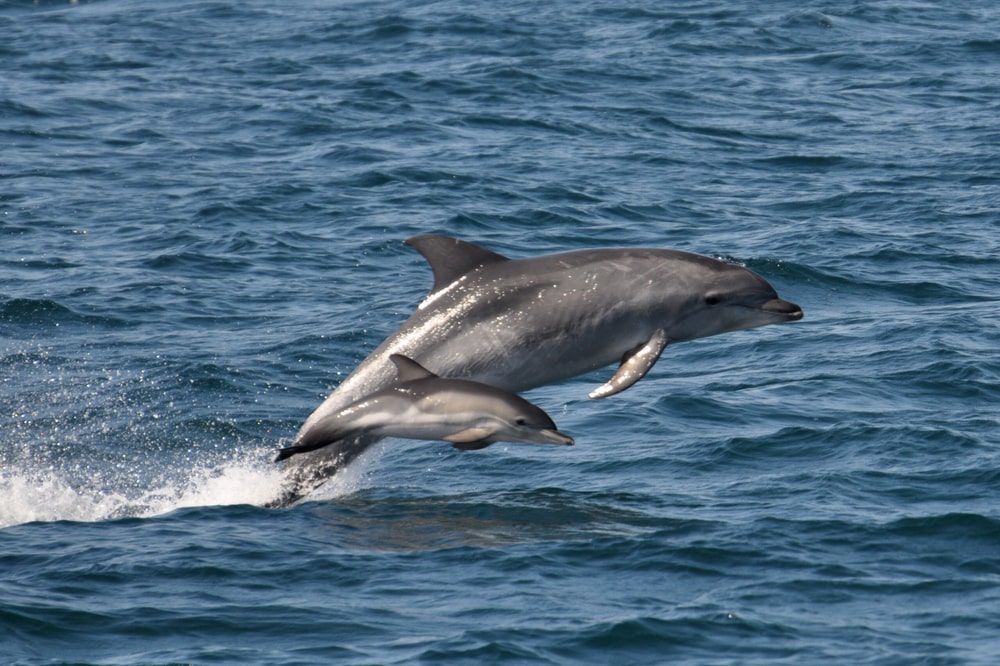
Yes, dolphins inhabit the waters surrounding Fuerteventura year-round. Bottlenose dolphins and short-finned pilot whales are the most frequently sighted species, with striped dolphins and occasional Bryde's whales appearing during certain months. The Atlantic corridor between Fuerteventura and the African coast sustains resident pods and migrating groups, making sightings probable on most departures from Puerto de Morro Jable.
The continental shelf drops steeply off Fuerteventura's western coast, creating upwelling zones that concentrate prey fish and attract foraging cetaceans throughout the calendar. Bottlenose dolphins patrol these nutrient-rich bands in stable social units, often approaching tour vessels with curiosity. Short-finned pilot whales, technically large dolphins, form multigenerational pods that can number fifty individuals during summer aggregations. Marine biologists working with the Canarian Cetacean Monitoring Network document dolphin presence in Fuerteventura's waters through photo-identification studies and acoustic surveys. The data confirms year-round residency for bottlenose populations and seasonal peaks for striped dolphins between April and September. Observers note that morning departures from Morro Jable align with peak cetacean surface activity, when pods feed along thermal fronts visible from elevated vantage points on shore. Tour operators departing from Puerto de Morro Jable navigate southwest into deeper pelagic zones where sighting probability exceeds seventy percent on calm-weather days. The volcanic seabed topography creates predictable foraging corridors that experienced captains monitor through seasonal pattern recognition. Dolphin watching excursions in Fuerteventura typically span three hours, covering twelve to fifteen nautical miles while naturalist guides interpret surface behaviors and explain the ecological relationships between cetacean species and the island's marine protected zones. The answer to whether dolphins inhabit these waters is empirical and repeatedly confirmed: resident populations persist, migratory visitors arrive on schedule, and the Atlantic conditions off Pájara sustain one of the Canary Islands' most reliable marine wildlife observation zones. Sighting success depends on sea state, departure timing, and the operator's route selection, but the baseline presence of multiple dolphin species remains a documented constant in Fuerteventura's offshore environment.
“The Atlantic corridor between Fuerteventura and the African coast sustains resident pods and migrating groups, making sightings probable on most departures.”
Are There Dolphins in Fuerteventura? Local Species and Sightings
The waters surrounding Fuerteventura host a diverse range of cetacean species due to the deep volcanic channels and nutrient-rich currents between the Canary Islands. These marine conditions create a stable environment that supports both resident and migratory populations throughout the year.
28 different species
The Canary Islands are home to nearly one-third of the world's known cetacean species, making the region a significant area for marine biodiversity.
Common Bottlenose Dolphins
This species is frequently sighted near the coast, often recognized by their social behavior and presence in groups of varying sizes.
Atlantic Spotted Dolphins
These dolphins are commonly observed in the deeper offshore waters, particularly during the warmer months when they follow migratory patterns.
Short-finned Pilot Whales
Often categorized behaviorally with dolphins, these cetaceans maintain stable resident populations in the deep channels between Fuerteventura and Gran Canaria.
Rough-toothed Dolphins
While less frequently encountered than other species, these dolphins are documented in the deep oceanic waters surrounding the archipelago.
Risso's Dolphins
Identified by their distinctive scarring and blunt heads, these dolphins inhabit the deep-water slopes found just off the island's coastline.
Year-round presence
The consistent ocean temperatures and topography allow many dolphin species to remain in these waters throughout the entire calendar year.
When Is the Best Time to See Are There Dolphins in Fuerteventura?
The best arrival window for wildlife spotting is 09:00–11:00, as calmer sea conditions during these hours significantly increase the probability of sightings. Morning trips typically offer the most stable waters before afternoon winds increase.
Weekday mornings
Low crowd density—
Morning trips provide the calmest sea conditions for visibility.
Spring months (April-May)
Moderate visitor numbers19°C to 23°C
Mild temperatures and calm seas favor consistent wildlife activity.
Autumn months (September-October)
Moderate visitor numbers22°C to 26°C
Warmer water temperatures often coincide with active marine life near the coast.
Winter months
High visitor density17°C to 20°C
Sightings remain possible, though sea conditions can be more variable.
Verdict: For the highest probability of sightings, plan your visit for a weekday morning between 09:00 and 11:00 during the months of April or October.
Operating Hours for Are There Dolphins in Fuerteventura Tours
The port area facilitating dolphin and whale watching tours operates daily to assist with departures. These hours reflect the standard availability for visitor inquiries and tour coordination.
| Monday | 09:00–18:00 | |
|---|---|---|
| Tuesday | 09:00–18:00 | |
| Wednesday | 09:00–18:00 | |
| Thursday | 09:00–18:00 | |
| Friday | 09:00–18:00 | |
| Saturday | 09:00–18:00 | |
| Sunday | 09:00–18:00 |
Getting to the Departure Point for Are There Dolphins in Fuerteventura
The departure point for whale and dolphin watching excursions is located at Puerto de Morro Jable, 35625 Pájara, Las Palmas, Spain. Visitors primarily access this harbor via the FV-2 road, which connects the main towns along the southern coast of Fuerteventura.
FV-2 road towards Morro Jable
Line 1 or 10 to Morro Jable bus station
From Morro Jable bus station to the port
Pre-Visit Checklist for Are There Dolphins in Fuerteventura Trips
Plan ahead to make the most of your dolphin-watching excursion from Puerto de Morro Jable.
-
Book your tour in advance — Operators fill up quickly, especially during peak season.
-
Bring sun protection and a hat — Extended time on open water means significant UV exposure.
-
Pack motion sickness tablets if prone — Offshore conditions can be choppy, particularly in the afternoon.
-
Wear non-slip footwear — Boat decks become slippery from sea spray and movement.
-
Carry a waterproof bag for electronics — Splashes and spray are common during marine excursions.
-
Arrive 15 minutes early — Departure times are strict and boats will not wait for late arrivals.
-
Bring binoculars for distant sightings — Dolphins may surface at considerable distances from the vessel.
Check availability
Frequently Asked Questions About Dolphin Watching in Fuerteventura
Everything you need to know about are there dolphins in fuerteventura